Thermal insulation refers to the mitigation of heat transfer between objects or spaces in thermal contact. In the industrial and construction sectors, insulation materials are used to minimise heat loss or gain in critical structures, equipment and processes. These solutions are essential to optimise energy efficiency and ensure safety in industrial environments.
Technical foams have proven to be exceptional thermal insulation solutions. They possess a number of characteristics that make them particularly suitable for a wide range of industrial applications:
- Low thermal conductivity
- Closed cell structure minimising heat transfer
- Lightweight and flexible
- Resistance to moisture and chemical agents
- Easy installation and adaptability to different shapes and configurations
Technical foams offer comprehensive solutions in a variety of industrial environments. Their ability to provide efficient insulation, even in extreme conditions up to 1200°C, makes them essential components in ensuring the safety, efficiency and performance of advanced industrial applications.
Types of thermal insulation foams
At ZFoam, we specialise in converting a wide variety of technical foams, designed to meet the specific needs of different industrial sectors and to improve energy efficiency in construction.
The main types of technical foams we offer for thermal insulation, including those that withstand elevated temperatures:
- Cross-linked polyethylene (PE) foams: These foams stand out for their thermal and acoustic insulation properties. They can be cross-linked or non-cross-linked. Non-cross-linked foams are 100% recyclable. They are lightweight, flexible and moisture resistant, characteristics that make them ideal for applications requiring durable, high quality materials. Their closed cell structure minimises heat transfer, providing efficient insulation in moderate temperature ranges.
- Polyurethane (PU) foams: Characterised by their low thermal conductivity, these foams are widely used in construction and industry due to their high effectiveness as thermal insulation. Their flexibility allows them to easily adapt to different shapes and spaces, facilitating installation in applications such as construction and the automotive industry. In addition, their ability to withstand extreme temperatures makes them an ideal choice in demanding industrial environments.
- Cellulose foams: Cellulose foams are a sustainable and efficient option. Made from recycled materials, they are an environmentally friendly alternative for thermal and acoustic insulation. They are used in applications such as wall and roof insulation in residential and commercial buildings, where energy efficiency and sustainability are key. Their ability to be biodegradable makes them perfect for applications that seek to reduce environmental impact. You can find out more about our cellulose foams here.
- Intumescent materials: These specialised materials activate around 200°C, expanding. This helps to limit the spread of flames and protects structures during fires.
- Melamine resin: This material is characterised by its light weight and excellent thermal and acoustic insulation properties. It is used in applications that require insulation without adding considerable weight to the structure, such as in the automotive and appliance industry. Its ease of installation and fire resistance make it a suitable choice for projects where safety is paramount.
- Fibreglass: A material composed of extruded glass yarns that are woven together to form a mesh. It is widely used for its heat resistance and acoustic properties. It is also non-combustible and lightweight, making it easy to install in construction and automotive applications.
- Rock wool: Made from volcanic rocks that are melted and transformed into fibres. It offers elevated temperature resistance up to 1200°C and is effective for sound absorption. It is often used in construction as a fire barrier to improve energy efficiency.
- Polymeric heavy masses: Polymer blends used for acoustic insulation. Their high density makes them effective in reducing sound transmission, and they also provide thermal insulation in applications such as automotive and machinery. Their flexibility allows them to be applied to irregular surfaces.
It is important to note that some of these materials, while not technical foams per se, can be used in conjunction with technical foams or in similar applications. For example, glass fibre and rock wool are insulating materials that are often used in similar applications to technical foams, but have a different structure and composition.
Intumescent materials, cellulose and textile felts have specific properties and applications that differentiate them from technical foams, although they may share some uses in certain contexts.
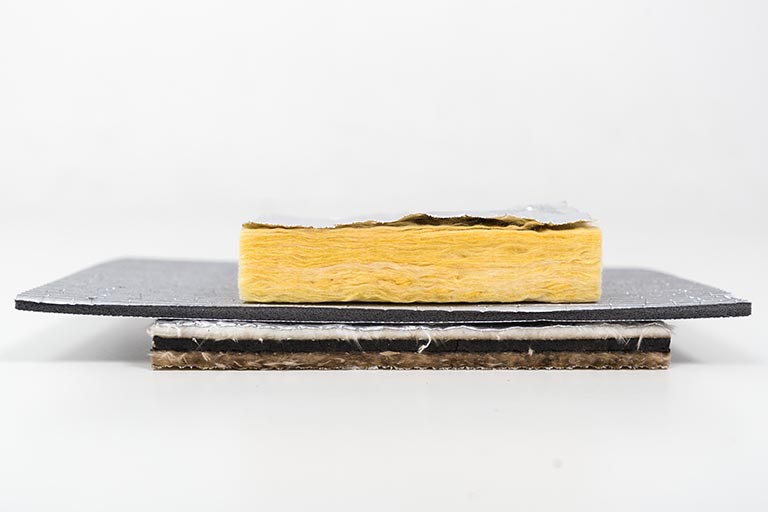
Industries for foams as thermal insulators
Elevated temperature insulating foams have applications in a variety of industrial sectors, thanks to their thermal, acoustic and resistance properties. The main uses include:
Automotive
In the automotive industry, insulation is essential for both thermal protection and soundproofing. The main applications of technical foams in this sector include:
- Engine compartment insulation: Use of heat-resistant polyurethane foams to protect sensitive components near the engine.
- Passenger compartment soundproofing: Application of rubber foams in doors and panels to reduce exterior noise.
- Exhaust system thermal protection: Use of intumescent foams around exhaust pipes to prevent the spread of heat to other parts of the vehicle.
Aerospace and marine
The combination of low weight and high heat resistance makes technical foams ideal solutions for aeronautics and marine. Applications include:
- Aircraft cabin insulation: Use of lightweight, high-density foams to maintain temperature and reduce noise in the passenger cabin.
- Thermal protection of critical components: Application of technical foams in areas close to aircraft engines to protect against extreme heat.
- Insulation of ship holds: Use of polyethylene foams to maintain temperature in cargo storage areas.
Electrical and electronics industry
Thermal protection and heat management are essential in this sector. Technical foams are used for:
- Battery protection: Use of flame retardant foams around lithium batteries to prevent the spread of fires.
- Transformer insulation: Application of elevated temperature foams to protect and insulate electrical transformers.
- Heat dissipation in electronic devices: Use of thermally conductive foams in electronic devices to manage the heat generated.
Renewable energy
Technical foams play a crucial role in the protection and insulation of renewable energy equipment. Some of the applications include:
- Wind turbine insulation: Use of weatherproof foams to protect the internal components of wind turbines.
- Solar inverter protection: Application of technical foams to insulate and protect inverters in photovoltaic installations.
- Insulation of thermal storage tanks: Use of elevated temperature foams in solar thermal systems to maintain stored heat.
Construction
Technical foams play a crucial role in construction, providing thermal insulation and improving the energy efficiency of buildings.
- Façade insulation: Use of cross-linked polyethylene foams to create an efficient thermal barrier on the exterior walls of buildings.
- Roof insulation: Application of sprayed polyurethane foams to seal and insulate attics and roofs, improving energy efficiency.
- Floor insulation: Installation of cellulose foam panels between floor joists to reduce heat loss.
Comparative table of types of technical foams for thermal insulation
| Material Type | Temperature range | Thermal Conductivity (W/mK) | Density (kg/m³) | Fire Resistance | Water absorption | Main uses |
| Cross-linked Polyethylene (PE) | -40°C – 100°C | 0.033 – 0.045 | 25 – 300 | Good | 0% | Construction, Automotive |
| Polyurethane (PU) | -200°C – 150°C | 0.028 – 0.040 | 60 – 100 | Good | 1 – 3% | Construction, Industry |
| Cellulose | -190°C – 300°C | 0.039 – 0.041 | 30 – 1460 | Excellent | 5 – 15% | Construction |
| Intumescent | Active at 200°C – 300°C | Variable (expanding with heat) | Variable | Excellent | variable | Fire protection |
| Melamine Resin | -50°C – 150°C | 0.035 – 0.040 | 8 – 11 | Excellent | 1 – 3% | Automotive, Household appliances |
| Fiber Glass* | -30°C – 540°C | 0.030 – 0.045 | 10 – 100 | Excellent | 0.2 – 2% | Construction, Industry |
| Rock Wool* | Up to 1000°C | 0.033 – 0.040 | 40- 200 | Excellent | 0.03 – 0.05% | Construction, Industry |
| Textile Felts | -30°C – 150°C** | 0.035 – 0.050 | 20 – 200 | Good | 15 – 30% | Construction, Automotive, Packaging |
(*Fibreglass and Rockwool are not foams but are included because of their common use in thermal insulation).
Note: The values provided are approximate and may vary depending on the specific formulation and manufacturer. This table provides a comparative overview of the materials mentioned.
Intumescent materials
Intumescent foams are essential for passive fire protection in industrial and commercial environments. These foams activate at temperatures between 200°C and 300°C, expanding up to 50 times their original volume and forming a foamy, carbonaceous insulating layer that delays the spread of fire. Their ability to expand and form an insulating layer when exposed to extreme heat is vital to:
- Delaying the spread of fire: By expanding, they create a barrier that prevents flames from advancing and reduces heat transfer. They also limit the spread of fire to surrounding areas, minimising damage.
- Protecting structures and components: They help maintain the structural integrity of buildings and equipment during a fire, allowing valuable time for evacuation and emergency response. This is essential to protect both people and critical infrastructure.
- Complying with safety regulations: Their use is essential to comply with international fire safety regulations and standards. Intumescent materials ensure compliance with regulations, avoiding penalties and ensuring safety.
At ZFoam, we are committed to quality, innovation and sustainability. We always seek to offer products that meet the highest standards, improve energy efficiency and protect the environment.
We also improve our processes to reduce environmental impact and explore new applications for our products in different sectors.
To achieve this, we have expanded our capabilities and developed complete and diversified solutions. In addition, we are a multi-material company with a resolute engineering team that enables us to create highly customised solutions. These include:
- Manufacture of ready-to-install multi-material kits and assemblies, with full traceability of the final parts, facilitating control and efficiency at each stage of the process.
- QR code labelling system to facilitate component identification and handling, reducing errors and optimising logistics.
- Integration of barrier materials for both low and elevated temperatures, as well as fire protection materials, ensuring safety and thermal efficiency in the most demanding projects.
- Advanced software tools to ensure simple and efficient installation, minimising implementation times.
- High flexibility in new projects and modifications, adapting to the changing needs of our customers.
Our team is available to advise you in choosing the best material for your project, providing customised solutions and technical support throughout the product life cycle.
If you are looking for thermal insulation solutions capable of withstanding up to 1200°C, or need advice on the best material for your project, do not hesitate to contact our team.