When transporting food, medicines or sensitive samples, packaging helps maintain the required temperature until delivery. Choosing the right insulation protects the product and makes better use of available space, without adding unnecessary weight or bulk.
At ZFoam, we work with a range of foams and very low thermal conductivity insulation materials that can be tailored to the size of the box and the specific requirements of each shipment.
The Benefits of Low Thermal Conductivity
The lower a material’s thermal conductivity, the more effectively it slows down heat transfer. In practical terms, this helps maintain the internal temperature throughout the journey.
The material and its thickness must be selected together. Increasing the thickness can improve insulation, but it also makes the packaging larger. The right solution must strike a balance between thermal protection, available space and transport costs.
What Does Your Shipment Actually Need?
Before choosing the insulation, it is worth answering four questions:
- Temperature: Within what temperature range must the product be kept?
- Time: How long could the shipment take, including waiting times and delays?
- Route: What external temperatures will it be exposed to?
- Load: What are the dimensions of the product, and how much space is available for the insulation and ice packs?
For example, a same-day local delivery and a two-day shipment in summer require different solutions.
The Box Design Matters Too
Even the best insulating material loses effectiveness if there are gaps between the panels or the lid does not close properly. That is why the lining must fit the base, sides and lid precisely, with particular attention to the joints.
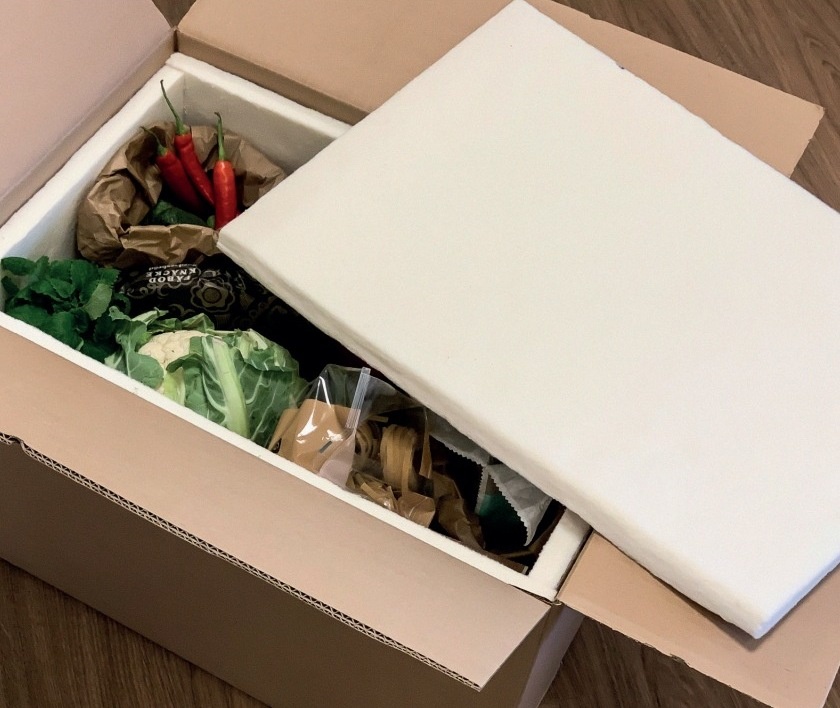
Box with an insulating foam lining and lid fitted to the base and sides.
Depending on the material selected, foams can provide both thermal insulation and impact protection. When a shipment requires refrigeration, the insulation helps retain the cold, while the ice packs and proper preparation of the load complete the system.
Test the Complete System Before Use
The material’s thermal conductivity alone does not determine how many hours the product will remain protected. To establish this, the box must be tested with its insulation, the intended load and the selected refrigerant, reproducing transport conditions and monitoring the internal temperature.
A Solution Tailored to Your Packaging
At ZFoam, we help you select and process very low thermal conductivity foams and insulation materials to create custom linings and components.
Tell us what you need to transport, at what temperature and for how long, so we can assess the solution that best suits your box and your operations.
Frequently Asked Questions About Last-Mile Delivery Packaging
What thickness of insulation does my box need?
It depends on the temperature the product needs to maintain, the duration of the shipment and the external conditions along the route. Greater thickness provides better insulation but also adds bulk and transport costs. It is best to define the required temperature range and transit time first, then validate the results through testing.
Does a low thermal conductivity material guarantee that the product will arrive at the correct temperature?
Not on its own. Thermal conductivity describes how a material performs, but the result also depends on the box design, the load and the refrigerant. Only testing under the actual shipping conditions can confirm how many hours of protection the complete system provides.
Can thermal insulation and impact protection be combined in a single component?
Yes, depending on the material selected. Some foams provide both insulation and cushioning, helping to simplify the packaging. Each project requires an assessment of the relative importance of these two functions for the shipment.
Are ice packs necessary?
When a shipment requires refrigeration, the insulation helps retain the cold, while the ice packs provide it. The number and positioning of the packs depend on the load and the duration of the journey and are fine-tuned during testing.